

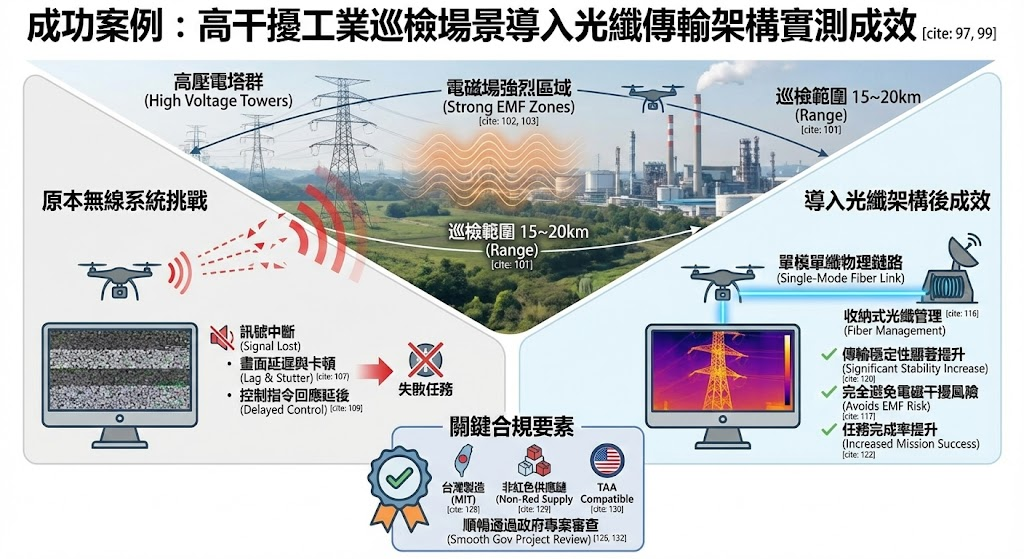
In high-voltage power facilities and large-scale industrial sites, drone-based inspection has long become a standard operational procedure. However, as electromagnetic density increases and wireless spectrum congestion intensifies, traditional wireless video return systems are increasingly exposing limitations in stability and predictability.
This case study documents the practical deployment experience of an energy facility client operating in a high electromagnetic interference (EMI) environment. By implementing a single-mode fiber video transmission module to establish a physical optical link architecture, the client significantly improved inspection stability and overall project reliability.
Project Background and Challenges
The client’s inspection coverage ranged approximately 15–20 kilometers, with operational scenarios including:
- High-voltage transmission tower clusters
- Strong electromagnetic field zones
- Metal-reflective environments
- Extended-duration hover observation requirements
The original system utilized a wireless high-definition video return solution. However, in high-interference zones, the following issues were observed:
- Video latency and frame freezing
- Intermittent signal dropouts
- Delayed control command responses
While such issues may be tolerable in consumer-grade applications, in industrial inspection and equipment diagnostics, video stability directly affects diagnostic accuracy and operational efficiency.
Technical Deployment Architecture
After technical evaluation, the project team implemented:
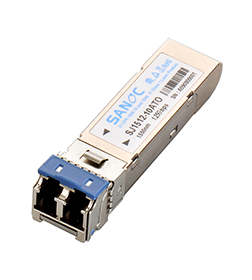
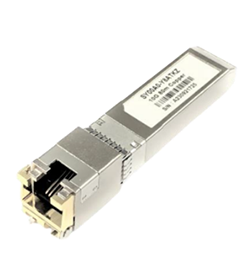
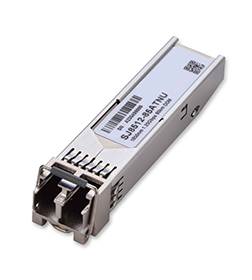
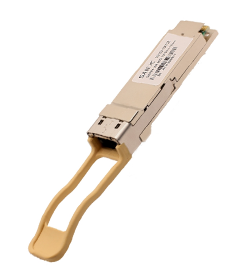
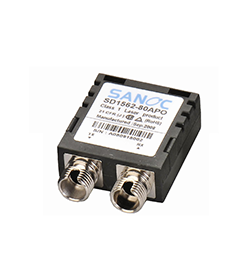
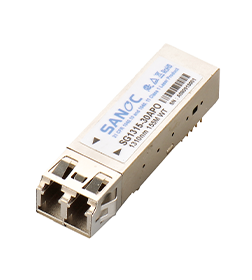
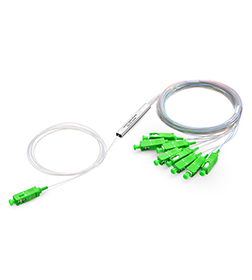
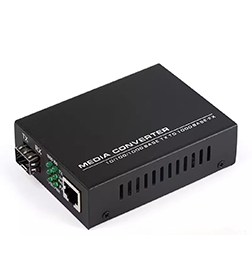
- Single-mode single-fiber optical transmission modules (paired TX/RX configuration)
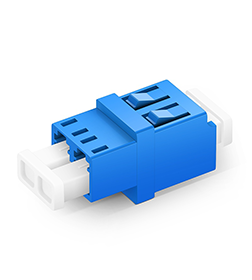
- FC connector-based physical optical link
- Synchronized CVBS video and TTL control signal transmission
- Ground-side managed fiber storage mechanism
The core concept of this architecture was not to increase bandwidth, but to completely eliminate electromagnetic interference risks by utilizing a dedicated physical fiber optic link.
Post-Deployment Performance Analysis
Following deployment, a two-month field validation was conducted. Observed improvements included:
- Significant enhancement in transmission stability
- No spectrum suppression issues in high-interference environments
- Increased mission completion rate
- Improved operator confidence
Client feedback indicated that although fiber-based architecture requires additional deployment management, its stability advantages in high-EMI environments far exceed those of wireless solutions.
Why Taiwan Manufacturing and a Non-PRC Supply Chain Were Selected
This project involved government acceptance procedures, making supply chain transparency and compliance documentation equally critical.
The deployed module features:
- Manufactured in Taiwan
- Non-PRC supply chain origin
- TAA Compatible architecture support
- ISO-certified manufacturing processes
These factors streamlined the project review and compliance validation process.
Conclusion
This case demonstrates that fiber optic video transmission does not replace wireless technology, but provides a more stable alternative in high-interference environments.
If you are evaluating:
- Drone inspection transmission stability challenges
- Video return architecture for high-EMI environments
- TAA-compliant supply chain requirements
We welcome further discussion regarding your operational needs and technical requirements.
We welcome collaboration discussions regarding fiber-based transmission solutions and project-specific requirements.

